
They caught a Starship coming home from orbit.
On November 14, 2026, the tower at Starbase grabbed a Starship out of the air after more than 22 hours in space. Here's how that works, and why it's a very big deal, in plain English.
The short version
- SpaceX caught a Starship returning from orbit for the first time ever, on Nov 14, 2026.
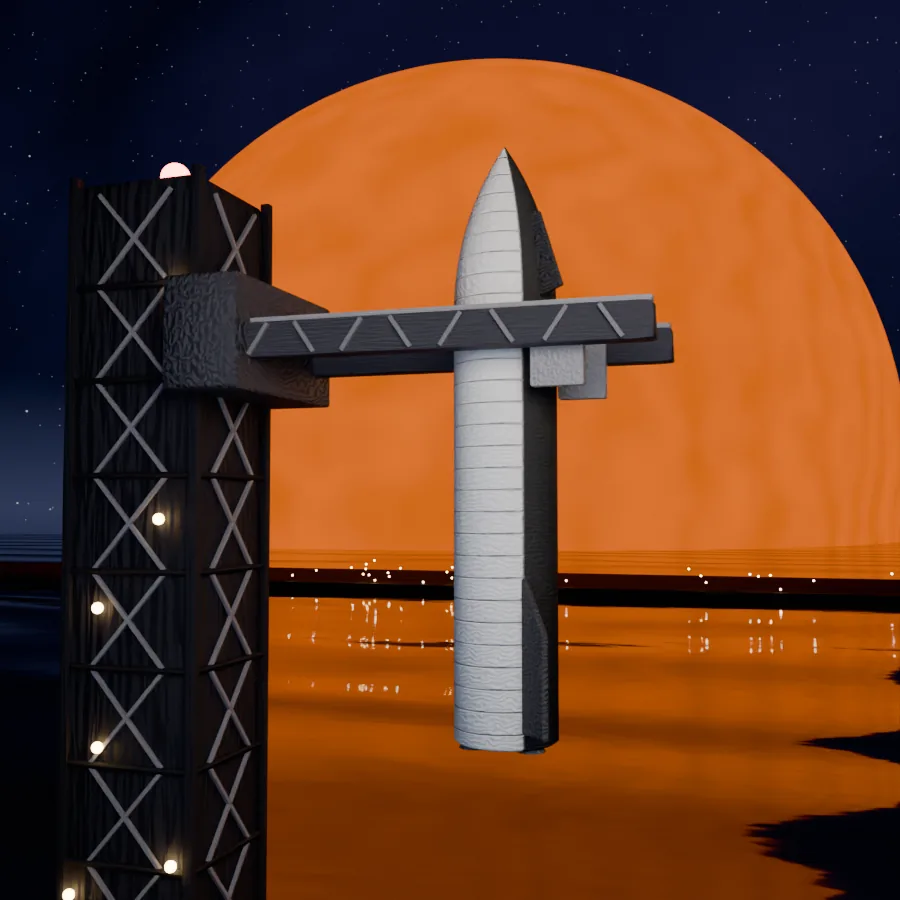
- The tower arms close on two catch fittings just below the flaps. No landing legs.
- Before the ship came home, three modified Starlink satellites photographed its heat shield.
- The booster didn't make it back. It splashed down in the Gulf.
- Why it matters: a ship you can check and fly again makes getting to space way cheaper.
"Mechazilla catches Starship!"
That's what SpaceX posted on November 14, 2026, after the Flight 15 ship came back to Starbase. It's the first time SpaceX has ever caught a Starship returning from orbit.
Let that sink in. The ship went around the planet, spent more than 22 hours up there, came back through the atmosphere, and flew itself into the arms of the same tower that launched it. Hell yeah.
The arms don't squeeze it. It sits on two pins.
You'd think the giant arms clamp around the body like a hand. Nope. They close in just below the ship's flaps, and two catch fittings (SpaceX's name, some people call them catch pins) settle down onto the arms.
No landing legs at all. That's weight the ship doesn't have to carry, and the tower that launched it is what brings it home.
First, they checked the heat shield. From space.
Coming home, Starship's belly heats to thousands of degrees. Those black tiles are its heat shield, basically an oven mitt for the steel underneath. A damaged heat shield doomed the shuttle Columbia in 2003, so this is not a small thing.
So SpaceX did something kind of genius. It modified three of its own Starlink internet satellites to take pictures of the ship's heat shield in orbit. The heat shield team looked at those photos plus ground tracking cameras and said it was in good shape. Only then did the ship come home.
The plan was to catch both halves. Only one came home.
Flight 15 was planned as the first flight to bring both the Super Heavy booster and the ship back to the tower. Booster 22 didn't make it. SpaceX says its boostback burn ended early because it was low on fuel, so it diverted itself to a splashdown in the Gulf.
Here's the striking contrast: the booster gets about six and a half minutes to make it home. The ship got more than 22 hours to prove it was healthy enough to come back.
Check it, fly it again. That's how space gets cheap.
Throwing away a rocket every flight is like flying a jet across the country and then scrapping it. If SpaceX can catch a ship, look it over, and fly it again, trips to space get much cheaper.
To be clear: rapid reuse is the goal, and it hasn't happened yet. But catching a ship coming back from orbit is the step everything else needs. And it worked.
Sources
- SpaceX, "Mechazilla catches Starship!" (Nov 14, 2026)
- SpaceX, final approach (Nov 14, 2026)
- SpaceX, "Starship and its heatshield are healthy" (catch planned ~22.5 hours after launch)
- SpaceX, Returning Starship to the Launch Site
- SpaceX, Starship Flight 15
- SpaceX, Super Heavy diverted to an offshore splashdown in the Gulf
- SpaceX, Landing burn and splashdown for Booster 22
- SpaceX, Starship (vehicle overview)
Only facts from these sources made it in. If SpaceX hasn't said it, we don't claim it.